Nine o'clock is when the clinic finally goes quiet in your head. The last patient left hours ago, the team have gone home, the children are in bed, and that is exactly when the questions arrive. Not big strategic questions. Small, specific, nagging ones. Did that treatment plan go out? Who is chasing it? What did we actually make this month?
For a long time I answered them the only way I could: by opening five different things. The booking system for the bookings. The bank for the money. A Drive folder for the policies. The team WhatsApp for what happened today. And a spreadsheet, mine, held together with memory. Every question meant a search, and every search ended at ten past ten with the answer "I think so".
This series is the questions I kept asking, and the screen that now answers each one. The screens are real; the clinic in the pictures is fictional.
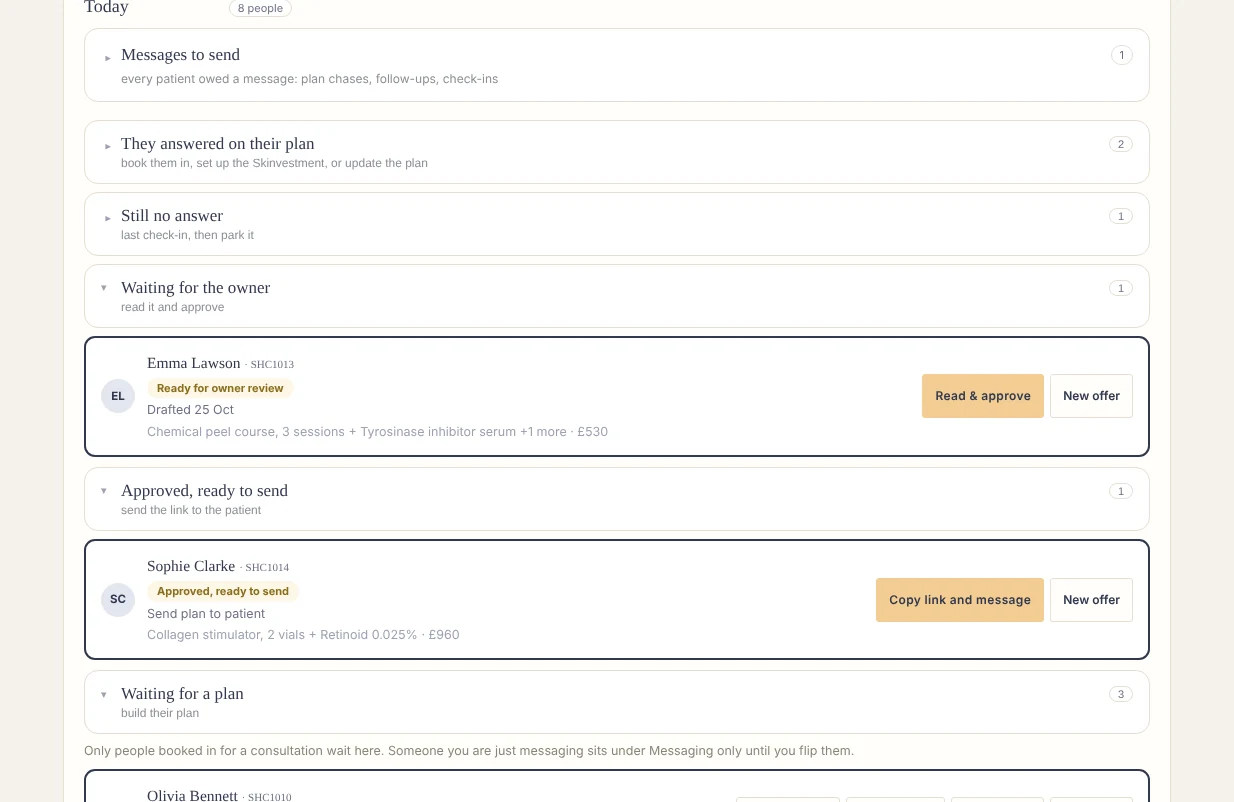
"Did anyone send her treatment plan?"
The question behind this one is simpler: where is she? A patient who has had a consultation but no plan is in nobody's list. Phorest knows she came in. Nothing knows she is owed a plan. So she sits in a gap until somebody remembers, and somebody is usually me, at 9pm.
The answer is one stage. After a consultation she appears in one place, Waiting for a plan, and she stays there until the plan is written, approved and sent. Then the app asks the team, a week later, whether she replied. The second piece in this series is about that whole chain.
"Did we make money?"
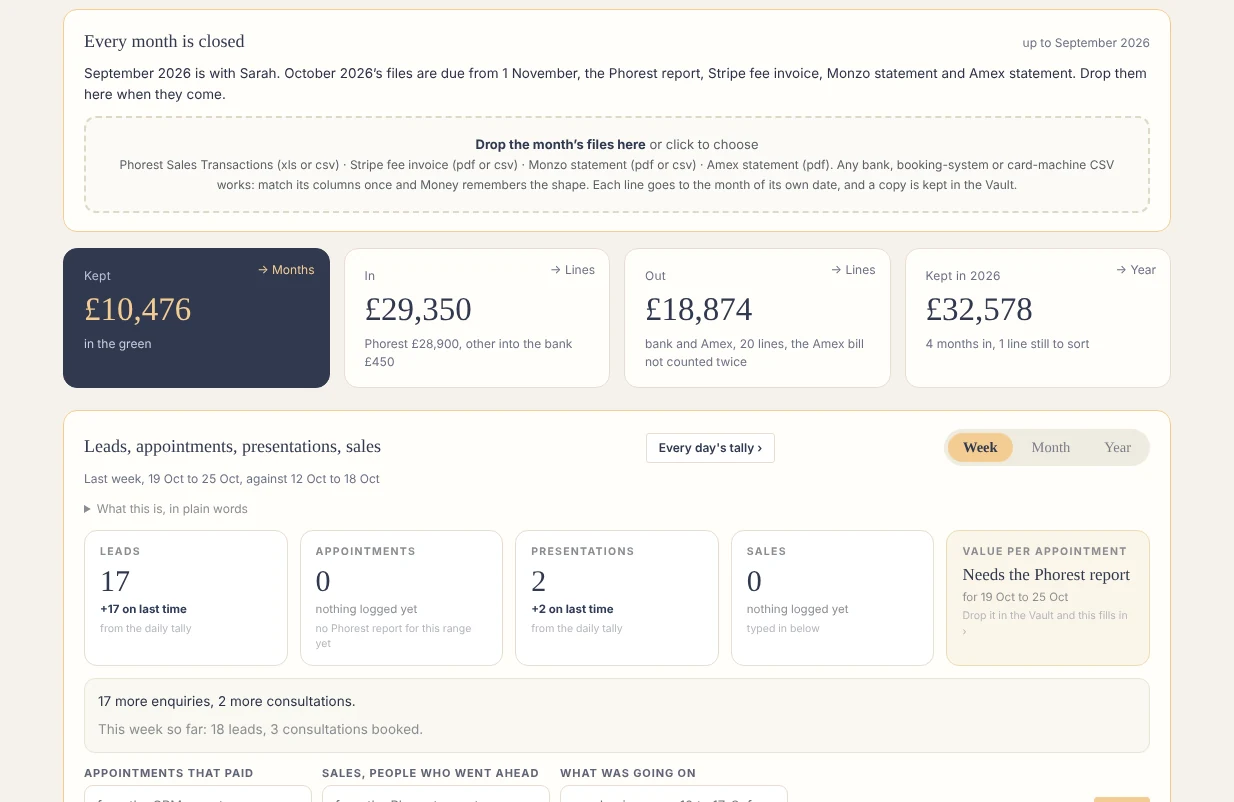
The honest answer for most of us is "I will know when the accountant tells me", which is months late and after the fact. The reason is not that the numbers are hard. It is that they live in four files and nobody has read every line.
So the app reads every line. Drop in the month's files, the sales report, the card processor, the bank statements, and every line is sorted into a bucket. One In, one Out, one Kept. Close the month in five steps. The third piece walks through them.
"Could I find it if an inspector rang?"
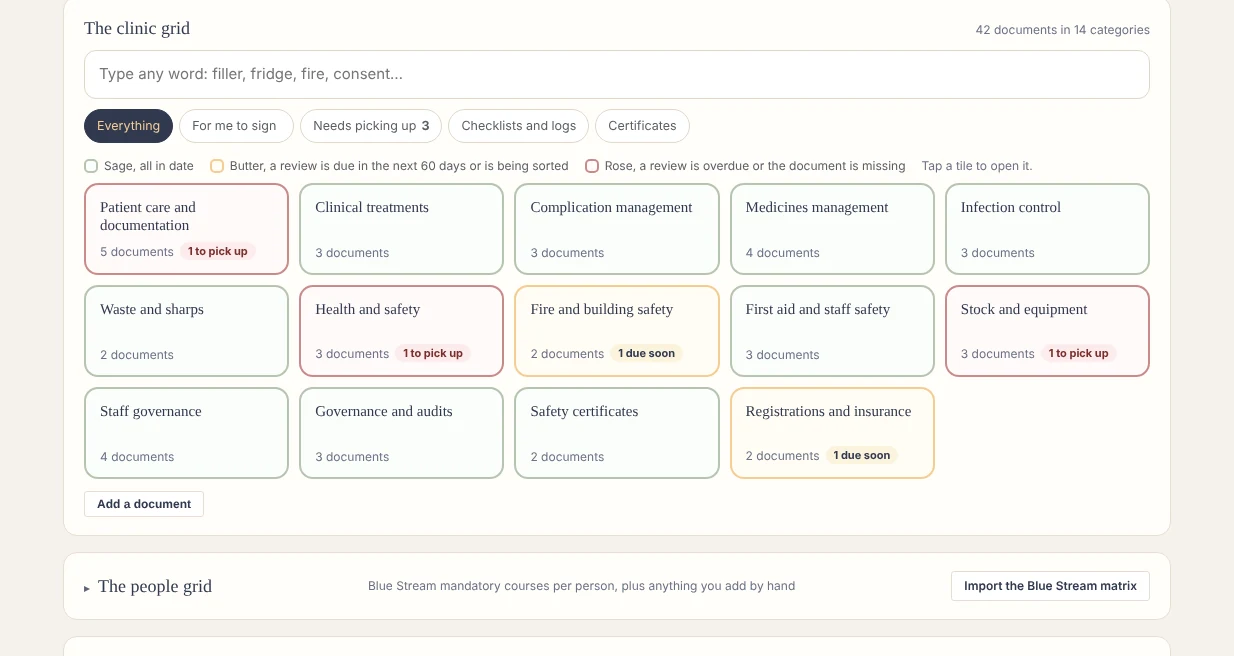
Every clinic has the documents. The question is whether you could put your hand on the right version, with the signatures, in under a minute, without a ring binder. The answer is a grid: every policy, procedure and record in one place, in categories, in your clinic's own words, with "I have read this" on the page itself. Overdue works itself out, so nothing is quietly out of date.
"What did the team actually do today?"
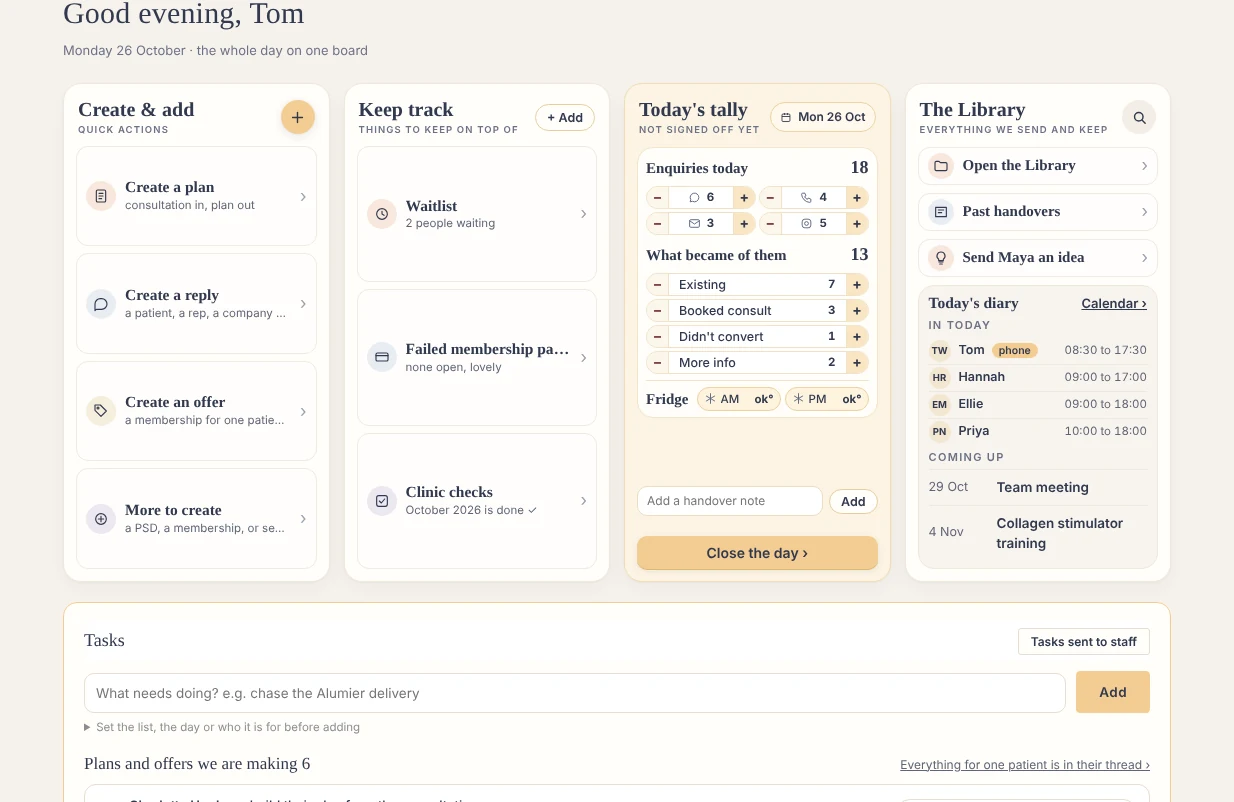
Not in a suspicious way. In a "did anything happen that I need to know about before tomorrow" way. The answer is three steps at the end of the day, from any phone: the tally of what came in, the handover of what the next person needs to know, and the sign off. I read it from the sofa. The fourth piece is about why the handover is the step that matters most.
"The questions did not go away. They got answered before I asked them."
That is the whole idea. Not another system to run, a layer on top of the one you have, that tells you what needs doing, who, and by when. The name is what it gave me back.