A consultation is the most expensive hour in the clinic. Somebody books it, somebody confirms it, a clinician gives it their full attention, and at the end of it the patient leaves with a head full of options and a promise: "we will send your plan over".
That promise is where patients used to go missing. Not dramatically. Quietly. The plan was half written on a Tuesday, finished on a Thursday, sent on a Friday afternoon, and then nothing. Did she open it? Did she have a question she never asked? Was she waiting for us, or were we waiting for her? Three weeks later I would see her name in Phorest and feel the small cold drop of "did anyone send her plan?"
The one-stage rule
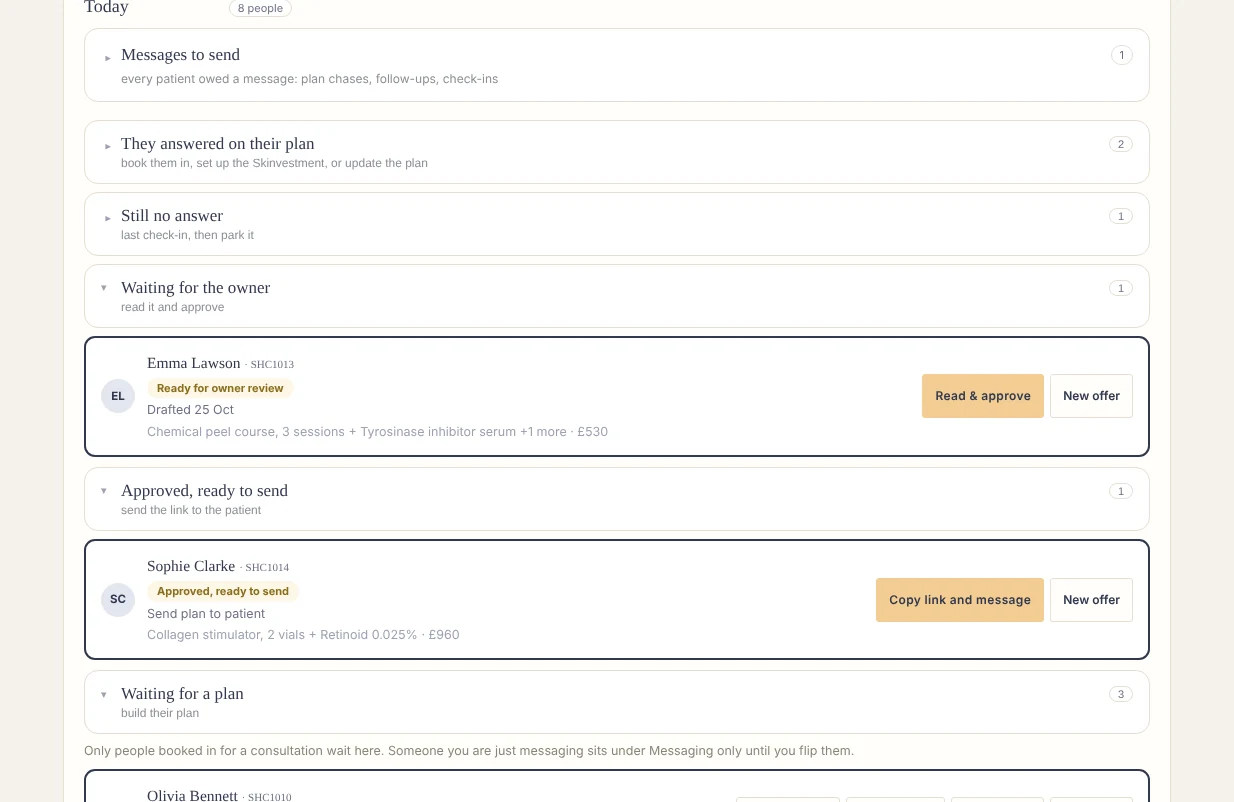
The fix started with a rule, not a feature: a patient sits in one stage, and only one. Not "sort of sent" or "I think Sarah did it". After a consultation she is Waiting for a plan. When the plan is written she is Waiting for the owner. When I approve it she is Approved, ready to send. When the team send it she is Sent, awaiting reply. Every person in the clinic sees the same word for the same patient, and the word tells you whose job it is next.
It sounds obvious. It took us far too long to get there.
Her own page, and a button
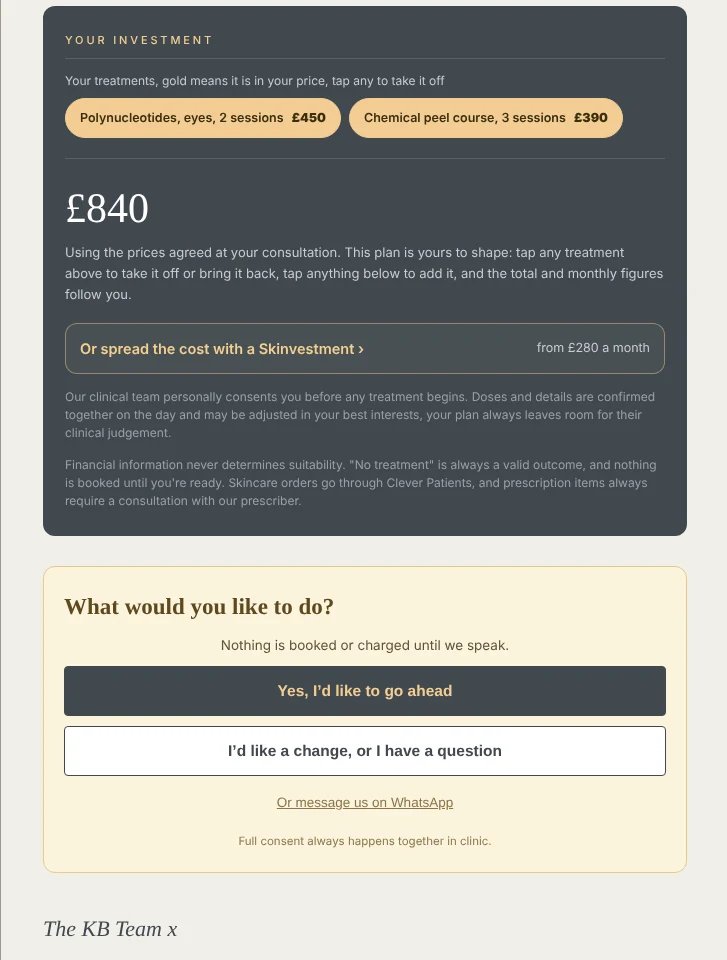
The plan itself is not a PDF. It is her own page, on the clinic's own address, written the way we talk, with the photos from her consultation beside it. At the bottom there are two buttons: yes, or "I'd like a change, or I have a question". Nothing is booked or charged until we speak. The yes tells us what she wants to start with. The change request comes back to the team with her words on it, and the chase pauses until we have answered her.
The follow-up ladder
The part that used to live in my memory now lives on a ladder:
- Three days after it went out, if the link has not been opened, it comes back to the team. Most of the time it is a wrong number or a spam folder, and a text fixes it.
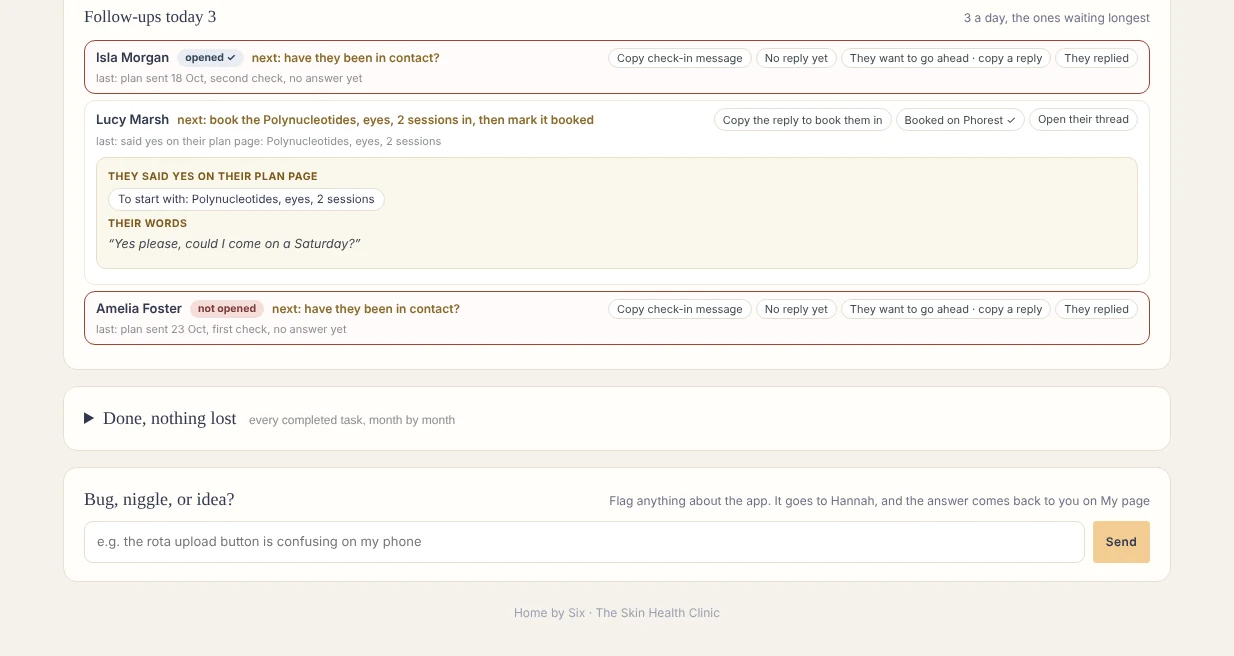
- A week after it went out, the team check in: have they been in contact? If yes, we record what was said. If no, the check comes back a week later.
- Four weeks later it returns once more, only if nobody has heard from her.
- Two months later, one last time. Then it rests. Not every patient is ready, and that is a valid outcome, not a failure.
Each rung is a card on the team's day with the ready message beside it. Copying the message is the team's part done; the card leaves. Nobody has to remember anything.
What changed
Plans go out within days, not weeks, because "waiting for a plan" is a list people can see. Replies come back, because the patient has a button rather than a feeling. And the 9pm question stopped, because the answer is on the screen before I ask it: who is waiting, on whom, since when.
"A patient sits in one stage, and only one."