I am in clinic most of the week, so this question is not about trust. It is about the days I am not there, and about the half of the day I do not see even when I am: the phone, the enquiries, the thing a patient said at the desk that someone meant to mention.
We used to answer it in a WhatsApp group. Which meant the answer was somewhere in a scroll, between a photo of a delivery and a question about Thursday. So the end of the day became three steps, done from any phone, in about four minutes.
1. The tally
What came in while you had the phone: WhatsApps, calls, emails, walk-ins. Then what became of them: existing patients, new ones who booked a consultation, new ones who did not, and the ones still in conversation. Everyone keeps their own tally and the day adds itself up. Over a month this is where the leads-to-sales picture comes from, so it has to be honest, and it is, because it is tapped at the time rather than remembered at the end.
2. The handover
What the next person needs to know. A rude patient. An email still to answer. "No reply from her, so we call tomorrow." A note can be marked to show on the next day's board, where it stays until somebody ticks it. Patient initials only; this is not the clinical record.
This is the step that matters. The tally tells me how busy we were. The handover tells me what would otherwise fall through the gap between today and tomorrow. If I only read one thing from the sofa, it is this.
3. Sign off
The daily jobs, ticked as they get done: the fridge readings, the end-of-day checks the clinic has set for itself. Then sign off. Anything still open on the handover goes to the top of the next day's board, so nothing is lost overnight.
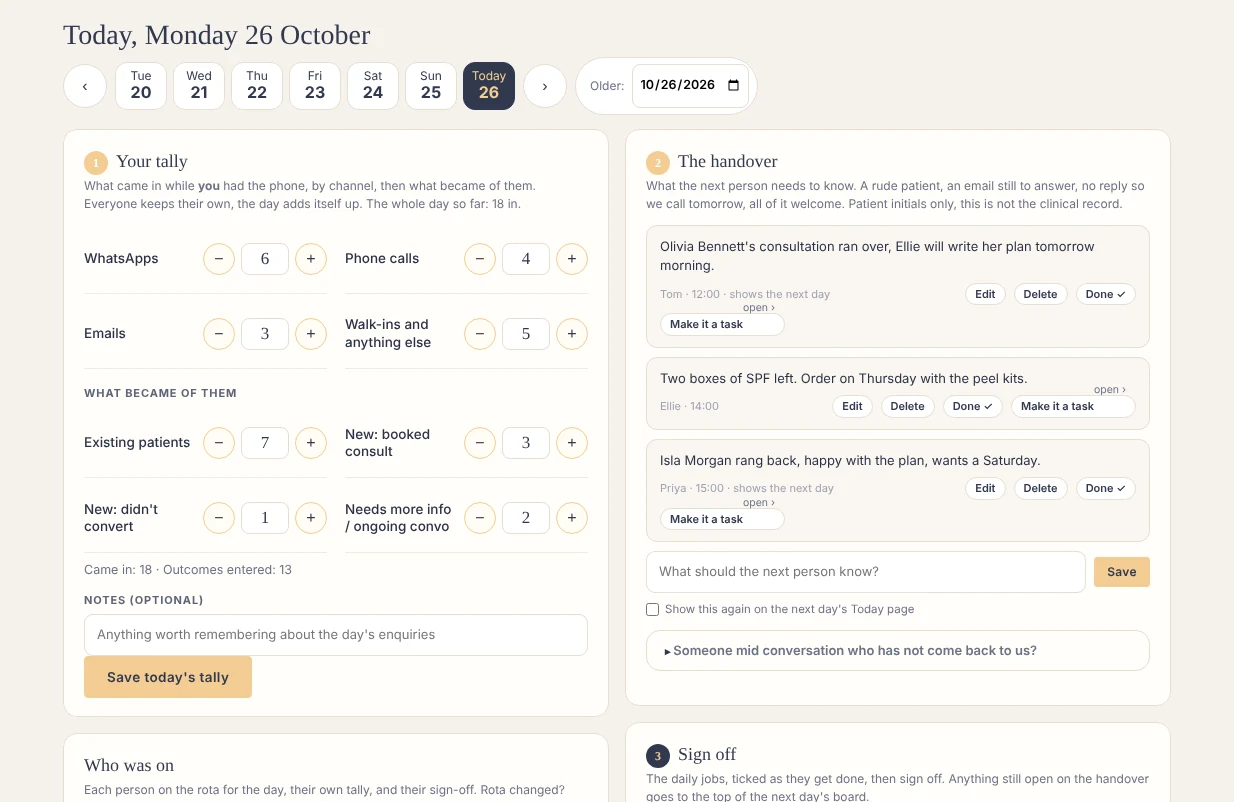
What I see
One board. Who was in, who had the phone, the day's numbers, the handover, and whether it is signed off. If it is not signed off by half six I know before I have asked. If it is, I do not need to ask at all.
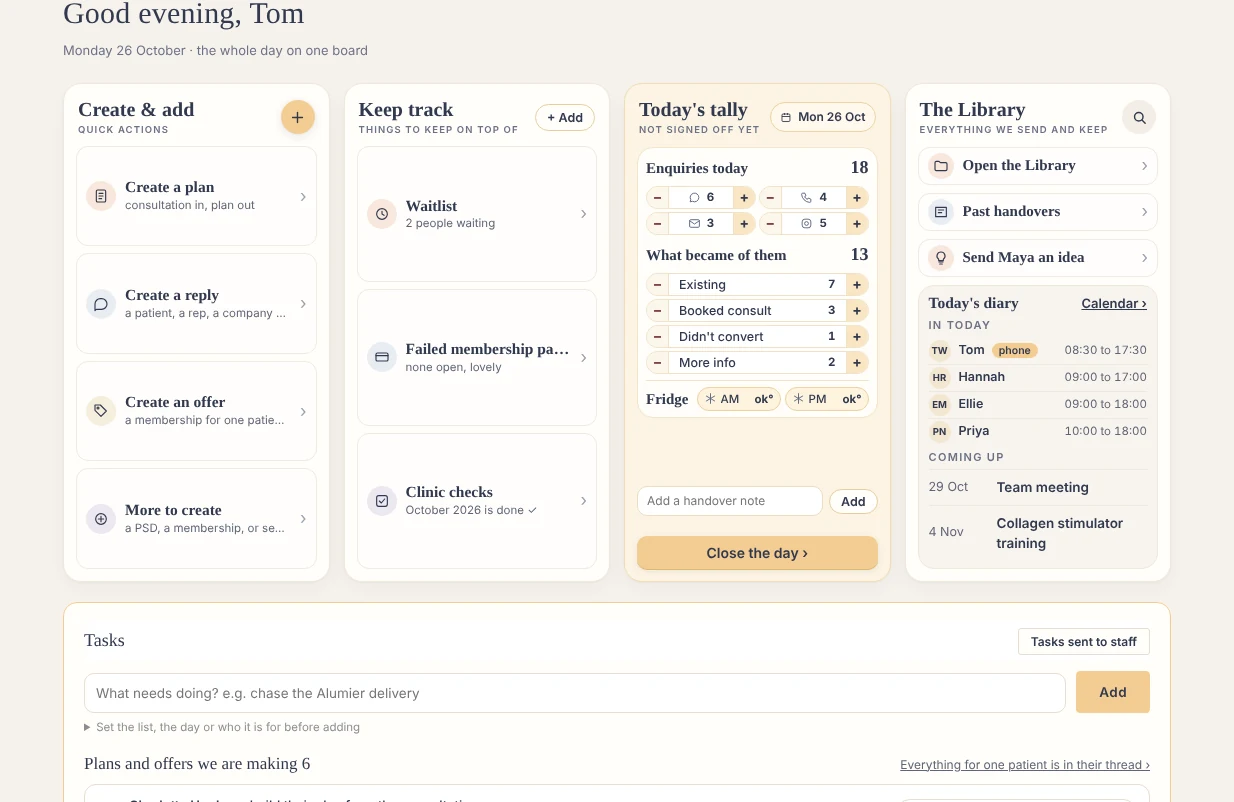
"The tally tells me how busy we were. The handover tells me what would fall through the gap."